
What Is Infertility Evaluation?
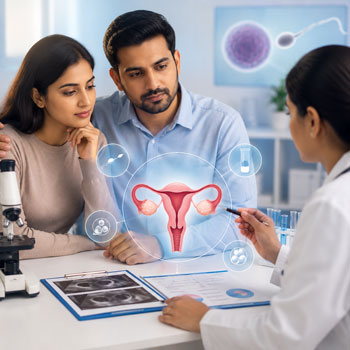
Infertility evaluation is a systematic medical assessment used to understand why a couple may be experiencing difficulty achieving pregnancy. It involves reviewing the reproductive health of both partners, identifying possible factors that may affect conception, and deciding whether treatment or further testing is required. Because fertility depends on several processes working together, a complete evaluation generally considers ovulation, egg reserve, reproductive organs, fallopian tubes, sperm health, medical history, lifestyle factors, and overall health.
Difficulty conceiving does not always mean that a serious fertility problem is present. Age, frequency and timing of intercourse, hormonal changes, underlying medical conditions, and reproductive health can all influence the chances of pregnancy. An infertility evaluation helps doctors obtain a clearer picture and recommend an appropriate, individualized approach.
When Is an Infertility Evaluation Recommended?
Couples are commonly advised to seek a fertility evaluation when pregnancy has not occurred after 12 months of regular, unprotected intercourse when the female partner is younger than 35 years. When the female partner is 35 years or older, medical evaluation is generally considered after about six months of trying because fertility naturally declines with increasing age.
Earlier assessment may be appropriate when there are irregular or absent menstrual periods, a history of pelvic infection, endometriosis, previous pelvic surgery, repeated pregnancy loss, known reproductive disorders, or concerns about male fertility. A doctor may also suggest earlier evaluation when either partner has undergone treatments or has health conditions that could affect reproductive function.
Why Is Infertility Evaluation Important?
Successful conception requires several steps. The ovaries need to release an egg, sperm must be available in sufficient number and quality, the fallopian tubes should allow the egg and sperm to meet, fertilization must occur, and the resulting embryo needs a suitable uterine environment for implantation. A problem affecting any of these stages may reduce the likelihood of pregnancy.
Infertility evaluation is important because it aims to identify which factors may be contributing to delayed conception rather than beginning treatment without understanding the possible cause. In some couples, more than one factor may be present. Occasionally, standard investigations do not reveal a definite explanation, which may be described as unexplained infertility.
Medical and Reproductive History
The first stage of infertility evaluation usually involves a detailed consultation. For women, the doctor may ask about menstrual cycle length, regularity, previous pregnancies, miscarriages, pelvic pain, infections, surgeries, contraceptive history, and previous fertility treatment. Information about thyroid disorders, diabetes, hormonal problems, medications, weight changes, and family medical history may also be relevant.
For men, the assessment may include previous pregnancies, childhood or adult illnesses, genital infections, surgery, injury, sexual function, medications, occupational exposures, and lifestyle habits. Providing accurate information helps the fertility specialist determine which investigations are most appropriate.
Female Infertility Evaluation
Female fertility assessment focuses on whether ovulation is occurring and whether the ovaries, uterus, and fallopian tubes are functioning appropriately. Menstrual history can provide useful information about ovulation, although additional testing may sometimes be required.
Ovulation and Hormonal Assessment
Blood tests may be recommended to evaluate hormones involved in ovulation and reproductive health. Depending on the individual's symptoms and menstrual pattern, tests may include thyroid function, prolactin, progesterone, and other reproductive hormones. These investigations can help identify hormonal conditions that may interfere with regular ovulation.
Ovarian Reserve Testing
Ovarian reserve refers to the remaining quantity of eggs in the ovaries. Tests such as Anti-Mullerian Hormone (AMH) and ultrasound assessment of antral follicles may be used as part of ovarian reserve evaluation. These tests provide useful information for fertility planning, but they do not independently determine whether a woman can or cannot become pregnant naturally.
Pelvic Ultrasound
A pelvic or transvaginal ultrasound allows the doctor to examine the uterus and ovaries. It can help identify conditions such as ovarian cysts, uterine fibroids, or other structural changes that could potentially affect fertility. Ultrasound can also be used to assess follicular development when monitoring ovulation.
Fallopian Tube Assessment
Healthy fallopian tubes are important for natural conception because fertilization usually occurs within a tube. A doctor may recommend a test to determine whether the fallopian tubes are open. One commonly used investigation is hysterosalpingography, in which contrast material and imaging are used to assess the uterine cavity and tubal patency. Other methods may be considered depending on the patient's clinical needs.
Male Infertility Evaluation
Male fertility assessment is an important part of evaluating a couple because sperm-related factors can contribute to difficulty conceiving. One of the primary investigations is semen analysis. This test evaluates several characteristics of semen and sperm, including sperm concentration, movement, and appearance.
If an initial semen analysis shows an abnormal result, the doctor may recommend repeating the test because semen parameters can vary. Further assessment may include a physical examination, hormonal investigations, ultrasound, genetic testing, or other specialized tests when clinically indicated.
Lifestyle Factors and Fertility
Infertility evaluation may also include a discussion about lifestyle. Smoking, excessive alcohol intake, significant weight changes, inadequate nutrition, certain occupational exposures, and some medications may influence reproductive health. The doctor may review exercise patterns, sleep, stress, and sexual frequency as part of the overall assessment.
Healthy lifestyle changes cannot correct every cause of infertility, but improving general health can support reproductive well-being and may be recommended alongside medical treatment.
What Happens After an Infertility Evaluation?
After the necessary investigations are completed, the fertility specialist reviews the results from both partners. Treatment recommendations depend on the identified cause, age, duration of infertility, reproductive history, ovarian reserve, semen findings, and personal preferences.
Some couples may benefit from lifestyle guidance or treatment aimed at improving ovulation. Others may require management of hormonal or reproductive conditions. Depending on the diagnosis, fertility options may include ovulation induction, intrauterine insemination (IUI), surgery for selected conditions, in vitro fertilization (IVF), or other assisted reproductive techniques.
Does Every Couple Need the Same Fertility Tests?
No. Infertility evaluation should be individualized. Performing every available fertility test is not necessary for every couple. A doctor usually begins with medical history, examination, and established initial investigations before deciding whether specialized testing is needed. This approach can help avoid unnecessary procedures while focusing on investigations that are relevant to the couple's circumstances.
Preparing for an Infertility Consultation
Before attending a fertility consultation, couples may find it helpful to gather information about menstrual cycles, previous pregnancies, surgeries, existing medical conditions, medications, and earlier fertility investigations. Previous laboratory reports, ultrasound scans, semen analysis reports, and treatment records should be carried when available.
Both partners are encouraged to participate in the evaluation whenever possible. Fertility is a shared reproductive health issue, and assessing both partners can provide a more complete understanding of the possible causes of delayed conception.
Take the Right Step Towards Understanding Your Fertility
Infertility evaluation is not simply a single test. It is a structured process designed to assess the important factors required for conception and identify potential reproductive concerns in either partner. Early and appropriate assessment can provide valuable information, reduce uncertainty, and help couples understand suitable options for their fertility journey.
If pregnancy is taking longer than expected, menstrual cycles are irregular, or there is a known reproductive health concern, consulting an obstetrician, gynecologist, or fertility specialist can help determine whether an infertility evaluation is appropriate. A personalized medical assessment provides the foundation for choosing investigations and fertility treatment based on individual needs.